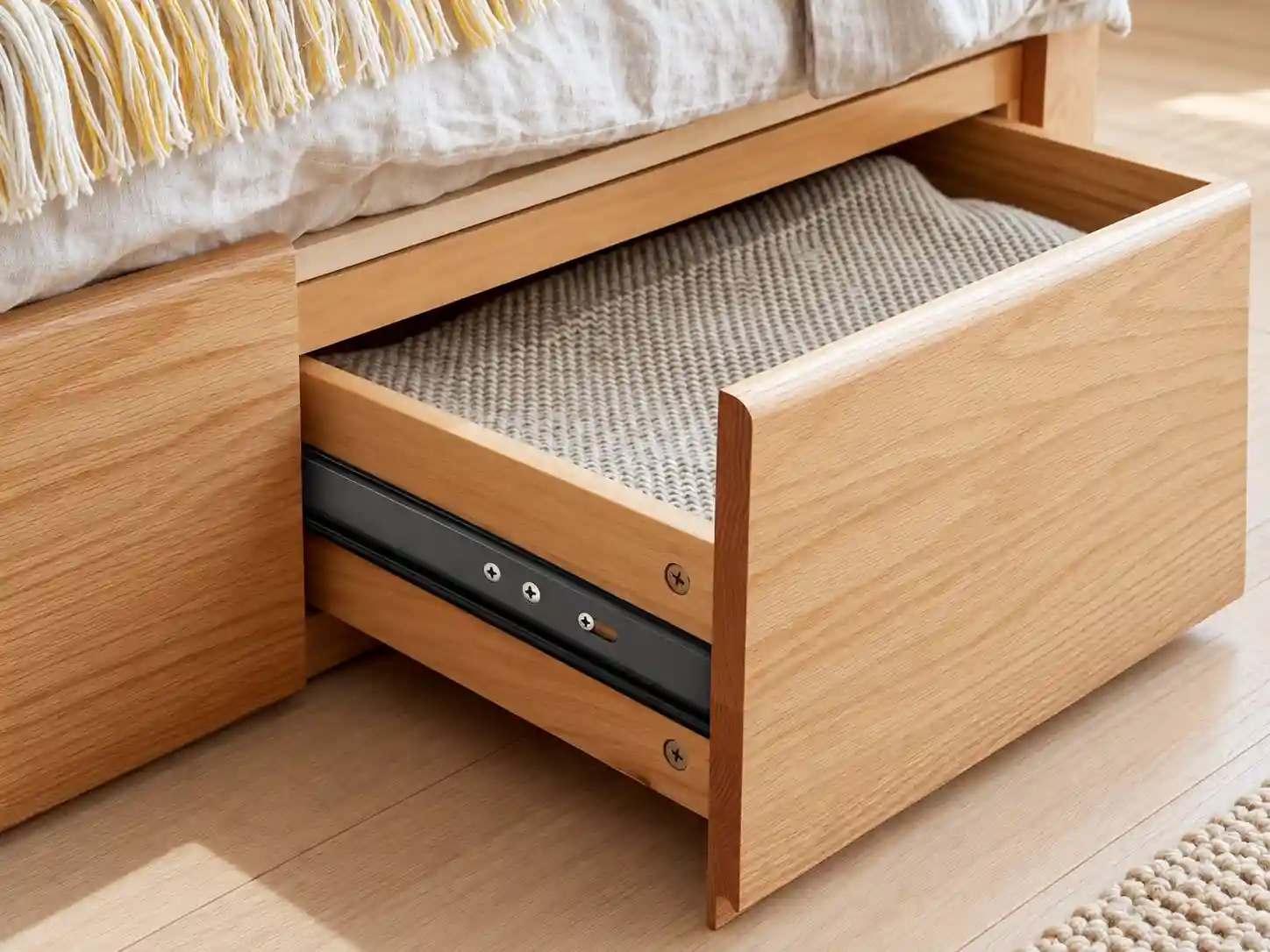
A soft-close drawer is a promise made every time someone uses it. The first week, it keeps that promise. A year later, some drawers have started to bang, stall halfway, or close crookedly, and the customer remembers the disappointment far longer than the quiet close they enjoyed at the start. Most of these failures follow familiar patterns, and knowing them helps you avoid building them into your product.
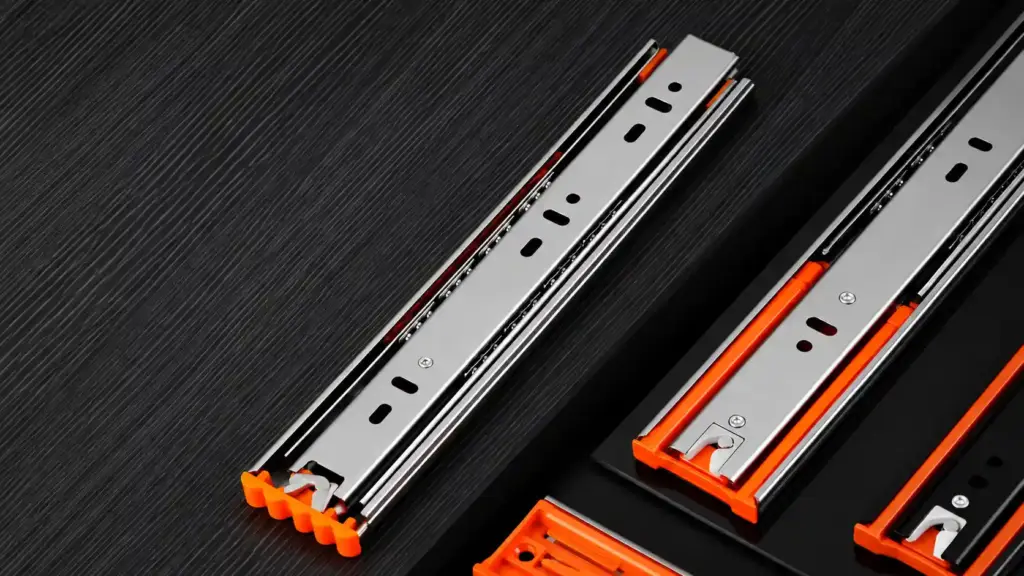
How the mechanism works, in plain terms
A soft-close mechanism slows the drawer near the end of its travel and then draws it gently shut. It has to do this across drawers with different weights, different closing speeds, and different amounts of daily use. That is a lot to ask of a small component, and it explains why quality and fit matter so much.
The most common failure patterns
The drawer slams anyway. Damping that is too weak for the load lets the drawer arrive at the end of travel too fast. This often happens when a mechanism chosen for light drawers ends up in heavy ones.
The drawer stalls before closing. If the damping is too strong for a light drawer, or if friction elsewhere is too high, the drawer stops a few centimeters short. Customers then push it closed by hand, which defeats the point.
The drawer closes unevenly. When the two slides in a pair behave differently, one side leads and the other lags. The drawer twists slightly, and over time that twisting causes wear and noise.
The effect fades. A mechanism that performs well in a sample may lose effectiveness after heavy use. Customers describe this as the drawer “getting loose.”
What tends to cause these problems
- A mismatch between the mechanism and the load
- Slides in a pair that are not consistent with each other
- Misalignment during installation
- Dirt, debris, or poor finishing in the drawer box
- Drawer boxes that are slightly out of square
Notice that not all of these are the supplier’s fault. Some come from how the drawers are built and installed. That is useful, because it means you control part of the outcome.
Prevention during product development
Before you commit to a design, test under conditions that mirror real life:
- Close the drawer from several starting distances
- Test with an empty drawer, a typical load, and a heavy load
- Use both gentle and firm closing pushes
- Repeat the cycle many times and watch for change
- Compare left and right sides for balance
If the behavior changes noticeably between light and heavy loads, consider whether you need different slide options for different drawer types.
Prevention during production
Consistent assembly keeps the mechanism working as designed:
- Use jigs or templates so slides are mounted at the same position every time
- Check that drawer boxes are square before installing hardware
- Keep the working area clean so debris does not reach the slides
- Test each drawer after installation instead of waiting until the cabinet is complete
- Record any adjustments so they can be repeated across a batch
What to ask your supplier
A good supplier can explain how they keep the mechanism consistent from unit to unit and batch to batch. Ask how they handle changes in materials or processes, and how they would respond if you reported a closing problem. Clear, specific answers suggest a company that has thought about these things.
SOTAL describes itself as a factory-direct furniture hardware manufacturer focused on drawer slide systems, combining practical engineering, consistent quality, and responsive service to support long-term B2B partnerships. For a buyer, responsiveness matters at exactly the moment a closing problem appears, and you can judge it early by how quickly and clearly questions get answered during sampling.
Keep records so problems can be traced
Note which batch each drawer came from, and keep a reference sample from your approved order. If a problem surfaces later, that information helps you work out whether the cause is a product change, an installation issue, or normal wear.
When to reconsider the product
If a closing problem keeps appearing despite careful installation, the slide may not suit the application. Perhaps the loads are heavier than expected, or the drawer design needs a different approach. Raise it early with the supplier, including the possibility of customization if standard options do not fit.
Where to begin
If you are evaluating soft-close slides in China, include these failure patterns in your test plan and ask each supplier how they address them.
The takeaway
Soft-close drawers fail in recognizable ways: slamming, stalling, closing unevenly, or fading with use. Test across loads, install consistently, keep records, and choose a supplier who communicates clearly. That combination keeps the quiet close quiet for years.
