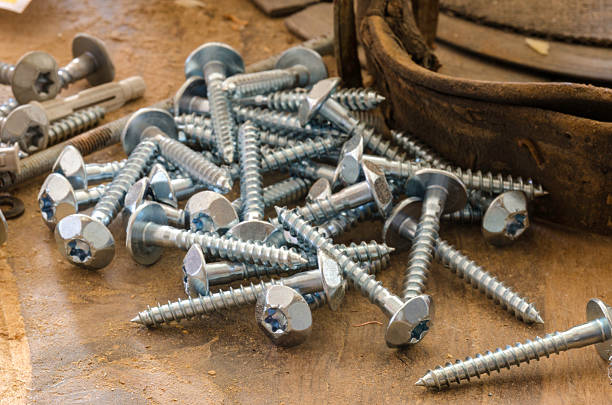
Quick Answer: Screw machined products are precision turned parts made on automatic or CNC screw machines, originally designed to mass produce fasteners like screws. Today the term covers a wide range of small, cylindrical, high tolerance components used across automotive, medical, aerospace, and electronics manufacturing. Their appeal comes down to speed, repeatability, and tight dimensional control at volume.
Ask anyone who has sourced parts for a high volume production run and they will tell you the same thing. Finding a process that holds tolerance across ten thousand identical pieces is harder than it sounds. That is exactly the problem screw machining was built to solve.
What Screw Machining Actually Means
The name goes back to the 1800s, when Swiss watchmakers needed a way to produce tiny, accurate screws and pins for clockwork mechanisms. Christopher Miner Spencer built the first automatic screw machine in 1873, and the concept stuck. A bar of raw material feeds through the machine, cutting tools shape it, and a finished part drops off the end. No manual repositioning, no operator guesswork between cuts.
Modern screw machines fall into two broad categories. Single spindle machines process one part at a time and suit lower volume or more complex geometries. Multi spindle machines run several tools simultaneously across multiple spindles, which is where the real throughput advantage shows up. A well tuned multi spindle setup can output finished parts every few seconds, hour after hour, without drifting out of spec.
Why Screw Machined Products Matter For High Volume Work
Here is the thing most buyers miss when they compare machining quotes. It is not just about cost per part. It is about consistency across the entire batch. A traditional CNC lathe running single part programs can absolutely hit tight tolerances, but each part still requires its own cycle of load, cut, and unload. Screw machines were engineered specifically to remove that bottleneck.
Companies like Swiss Isle Precision that specialize in screw machined products often work with fastener manufacturers, connector housings, and small precision fittings where a batch might run into the hundreds of thousands. At that scale, even a tiny variance compounds into a real quality problem. Automatic screw machines, especially Swiss type machines with guide bushings, keep the workpiece supported right up to the cutting edge. That support is what lets the process hold tolerances down to a few ten thousandths of an inch on parts with a high length to diameter ratio.
Materials And Applications
Screw machined products are typically made from free machining steels, stainless alloys, brass, aluminum, and increasingly engineering plastics like Delrin or PEEK. Brass in particular has long been a favorite for its machinability and corrosion resistance, which explains why so many plumbing fittings and electrical connectors are screw machined.
The applications stretch far beyond fasteners now. Medical device manufacturers rely on screw machined pins and housings for surgical instruments where surface finish and biocompatibility matter as much as dimensional accuracy. Automotive suppliers use the process for fuel system fittings, sensor housings, and small shafts. Electronics companies turn to it for connector pins and terminals that need to hold tight tolerances at a fraction of a cent per unit.
Where It Differs From Standard CNC Turning
A question that comes up constantly is how screw machining compares to standard CNC turning. Standard CNC turning is usually chosen for lower volumes, larger parts, or geometries that need frequent tooling changes. Screw machining is optimized for the opposite: high volume, smaller diameter parts with repetitive features. In practice, a lot of manufacturers use both, running prototypes and short runs on CNC lathes before moving proven designs to screw machines once volume justifies the tooling investment.
Common Misconceptions
One misconception worth clearing up: screw machining is not limited to screws anymore, despite the name. Another is the assumption that older cam operated machines are obsolete. Many shops still run cam driven multi spindle machines for extremely high volume, low complexity parts because the cost per piece beats CNC once tooling is set up and running. CNC screw machines, on the other hand, offer faster changeovers and better suit shorter runs or parts with more complex profiles.
Choosing A Supplier
When evaluating a screw machining supplier, ask about their in process inspection methods, not just their final QC report. Statistical process control during the run catches drift before it becomes scrap. Also ask what percentage of their spindles run multi spindle versus single spindle equipment, since that tells you a lot about the volumes they are set up to handle efficiently.
Frequently Asked Questions
Q: What is the difference between screw machining and CNC turning?
A: Screw machining is optimized for high volume production of small, repetitive parts, often on multi spindle equipment. CNC turning is more flexible for lower volumes, larger parts, and complex geometries that need frequent program changes.
Q: What materials work best for screw machined products?
A: Free machining steel, brass, stainless steel, aluminum, and certain engineering plastics all machine well on screw machines. Brass remains especially popular for its machinability and corrosion resistance.
Q: How tight can tolerances get on screw machined parts?
A: Well built Swiss type screw machines can consistently hold tolerances in the range of plus or minus 0.0002 to 0.0005 inches, depending on material and part geometry.
Q: Is screw machining cost effective for smaller production runs?
A: It depends on tooling setup time. For runs under a few thousand pieces, standard CNC turning is often more economical since it avoids the setup cost of dedicated screw machine tooling.
Q: What industries use screw machined products the most?
A: Automotive, medical devices, electronics, fluid power, and fastener manufacturing are the heaviest users, since all of them need small, precise, repeatable parts at volume.
